

DNA
The Next Generation Technology is Here!
Mike Byrd
Miami-Dade Police Department
Crime Scene Investigations
See also the instructional video "Processing the Crime Scene"
The importance of a proper and effective approach to processing a crime scene should never be taken for granted.
Over the past two decades in the field of ever-changing technology the most significant advances have been introduced into the analytical (laboratory examination of physical evidence) fields. It is important for the crime scene investigator or evidence recovery technician to be well read and keep abreast of these ever-changing techniques and methods in technology. We have to be aware and prepared to answer to the challenge.
What the Automated Fingerprint Identification System (AFIS) has done for fingerprint identification, The National Firearms and Projectile Database (DRUGFIRE) is doing for firearms identification, and now The Combined DNA Index Systems (CODIS) is having a dramatic influence on the comparison of blood and other tissue identification. The old standard serological testing labs are giving way to the new modern Forensic Biology section.
Until recently the issues of scrutiny and challenge in DNA technology was the laboratory analysis procedures. However that is about to change dramatically with a national standardization system in place. The sensitivity of this new exciting technology will pivot the focus and attention more to the on scene physical evidence collection and recovery methods and procedures. That is where we the crime scene investigators and evidence recovery technicians have to be prepared to step up and tone our basic skills and knowledge to assure that we do everything possible to be a successful link in the investigation process.
I recently had the opportunity to attend a presentation entitled "The Next Generation". The presentation dealt with the most recent advances in DNA technology. This exciting state-of-the-art technology is described as Short Tandem Repeats (STR's). The following information came from that presentation.
Length of testing results
- Many of the results from this new procedure will be available in just a few days.
- The finished reports will be completed in several weeks as opposed to several months with the current procedures.
Technical Advantages of the new procedure
- It will produce the results on small and/or degraded samples.
- The system can be automated.
- It is a very powerful discriminator and can result in identifications.
Assistance as an investigative tool
- This procedure can produce results on unsolved as well as unsubject cases.
- It can link serial cases.
- The results can be matched to a national DNA felon database of samples.
DNA identity statistics given
- In 1997, The FBI defined a likelihood of a random match to be less than one in 260 billion to be an exact match.
- The statistics obtained from DNA analysis can now be used to identify one individual to the exclusion of all others.
Human Identifications
- Parentage testing
- Forensic DNA casework
- Felon database
- Archeological remains
How does this effect us in the field
We will still be doing the same functions as before. We just now have been made aware of the sensitivity this new procedure will bring to the field and the precautions that we will have to take in order to properly document, handle, collect and preserve items of evidence. Our attention will need to focused on quality control and quality assurance.
Types of Biological evidence
- Blood
- Semen
- Tissue
- Bones
- Teeth
- Hair
- Nails
- Saliva
Safety
As with any other duties in crime scene work, safety is always a priority. The appropriate protective equipment and procedures effecting self contamination should be observed. The investigator/technician should avoid any direct contact with the evidence. No eating or drinking should occur on the scene.
Items that effect DNA
Some of the contaminates that will effect the DNA typing process are dirt, grease, and even some fabric dyes.
Scene Documentation
- After evaluating the scene the documentation still remains an important stage in the processing procedure. Photographs should be taken from every angle regardless of indoor or outdoor scene location.
- For walls or areas that have spattered or cast off blood patterns. Turn the camera to its side to get a vertical format allowing a series of photographs of the wall to be taken depicting a view from the ceiling to the floor.
- After the blood scene has been thoroughly photographed in its uninterrupted state. The investigator/technician can then use scales, alpha-numeric evidence markers, cones, and stick on letters or numbers which can be inserted for your series of special techniques photographs with the ID markers in place.
Collection techniques
- In standard crime scene procedure, the recovery of blood samples is accomplished by scrapping, swabbing, or collection of the stained item itself.
- A scalpel is used to scrape the stain onto a clean piece of paper, evidence envelope, or kem-wipe sterile tissue. After each scrapping the scalpel needs to be cleaned, so as not to contaminate the next sample.
- The stain can be swabbed by using a sterile cotton patch or cotton swab slightly moistened with distilled water.
- If the stained item can be collected it should be packaged in a clean paper container or wrap. If the stain is wet, the stain has to be allowed to air dry before packaging.
- All items should be consistently labeled with the appropriate information for identification.
In a news release dated September 17,1998
The Royal Canadian Mounted Police announced that samples collected from air crash victim's of Swissair flight 111, in Nova Scotia, DNA patterns representing 142 people (75 males, 67 females) have been established. The RCMP demonstrated that forensic DNA analysis is an effective tool for disaster identification and in some cases may be the only source of identification.
About the Author
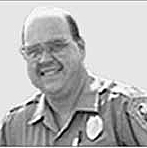
Mike Byrd (1955-2005) joined the Miami-Dade County Police Department in 1983 and started with the Crime Scene Investigations Bureau in 1987. He took an exceptionally active part in the science of forensic crime scene investigations, including development of new techniques, publishing methodology of crime scene procedures, and teaching. Mike developed new techniques for gathering and cataloging crime scene evidence including the lifting of fingerprints, vehicle tire impressions, and footwear impressions.
Mike's methods and analysis withstood the scrutiny of the criminal justice process. He published more than thirty crime scene articles on crime scene evidence collection and for the International Association for Identification and was awarded The Good of the Association Award in 2002 for his innovative identification methodology and techniques. He taught crime scene investigation procedures and techniques at police departments around the country and took great pride at instructing smaller Florida police departments in the latest techniques in evidence gathering.
Mike performed the tough detailed oriented forensic work at many major crime scenes and disasters over two-decades. He gathered, processed, and identified the DNA evidence used to convict the Tamiami Strangler for a string of heinous murders in 1994. His thoughtful gathering of evidence at the Valujet crash allowed families to reach closure for the deaths of loved ones.
Mike Byrd died after a more than two year battle with multiple myeloma cancer. Annually, the Police Officer Assistance Trust awards the Mike Byrd Crime Scene Investigation Scholarship in his honor.
Articles by Mike Byrd
- Applied Basic Concepts...WHAT IT TAKES
- Crash
- Developing and Lifting Latent Footwear Impressions
- Disaster Management
- DNA, The Next Generation Technology is Here!
- Duty Description for the Crime Scene Investigator
- Fragile (Sensitive) Fingerprint Recovery from Mylar Surface
- Hazards and a Crime Scene
- If It's There, We'll Find It!
- Innovative Evidence Identification Markers at a Crime Scene
- Other Impression Evidence
- Packaging Firearms
- Proper Tagging and Labeling of Evidence for Later Identification
- Reaching Beyond the Norm
- Ridge Detail at a Crime Scene
- Simple EZ Sketching
- Simple Tire Standards Collection
- The Corpse as a Scene
- Written Documentation at a Crime Scene
Article submitted by the author
Article posted October 29, 1999